Cafes & Restaurants
Date Published
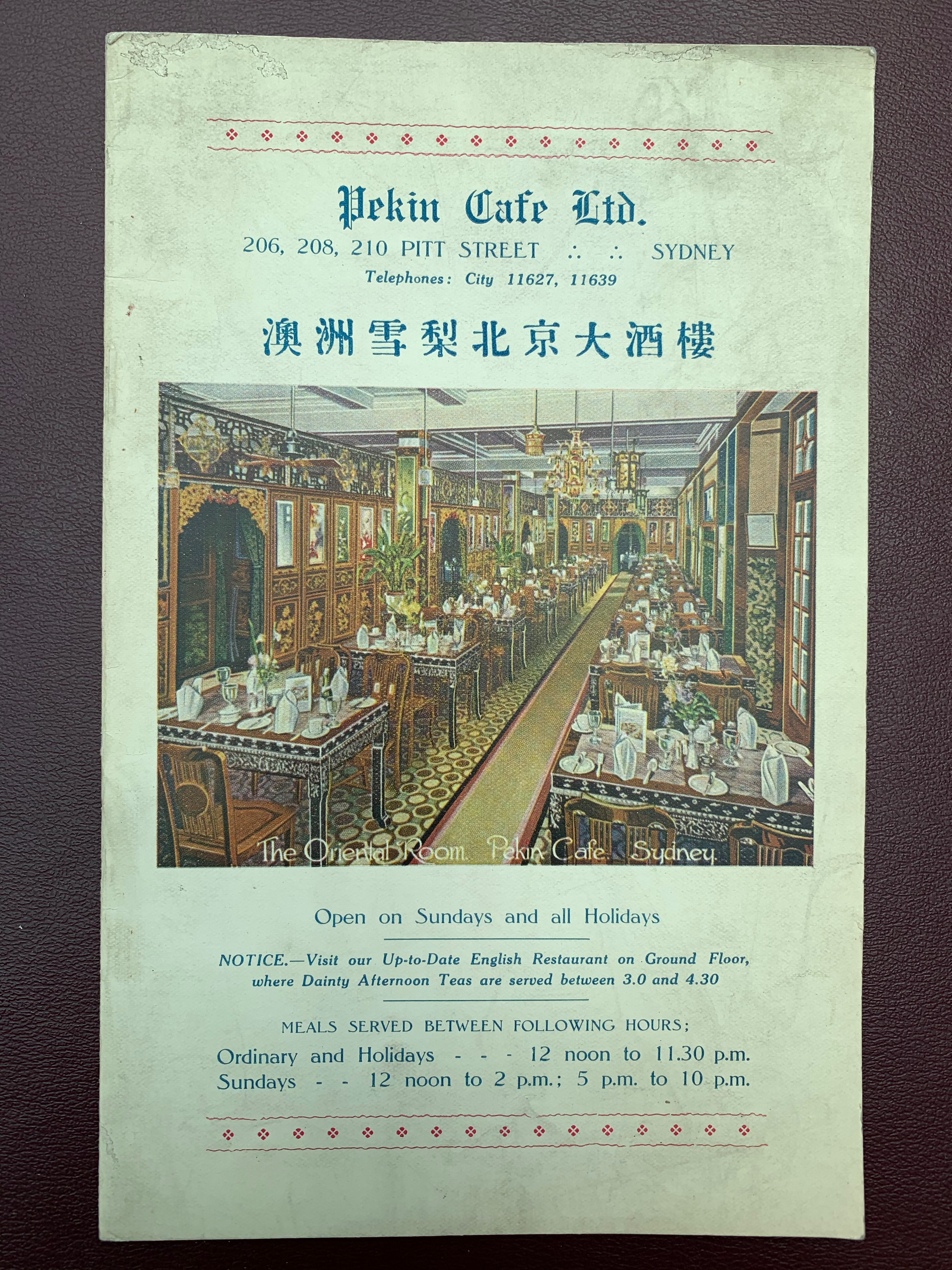
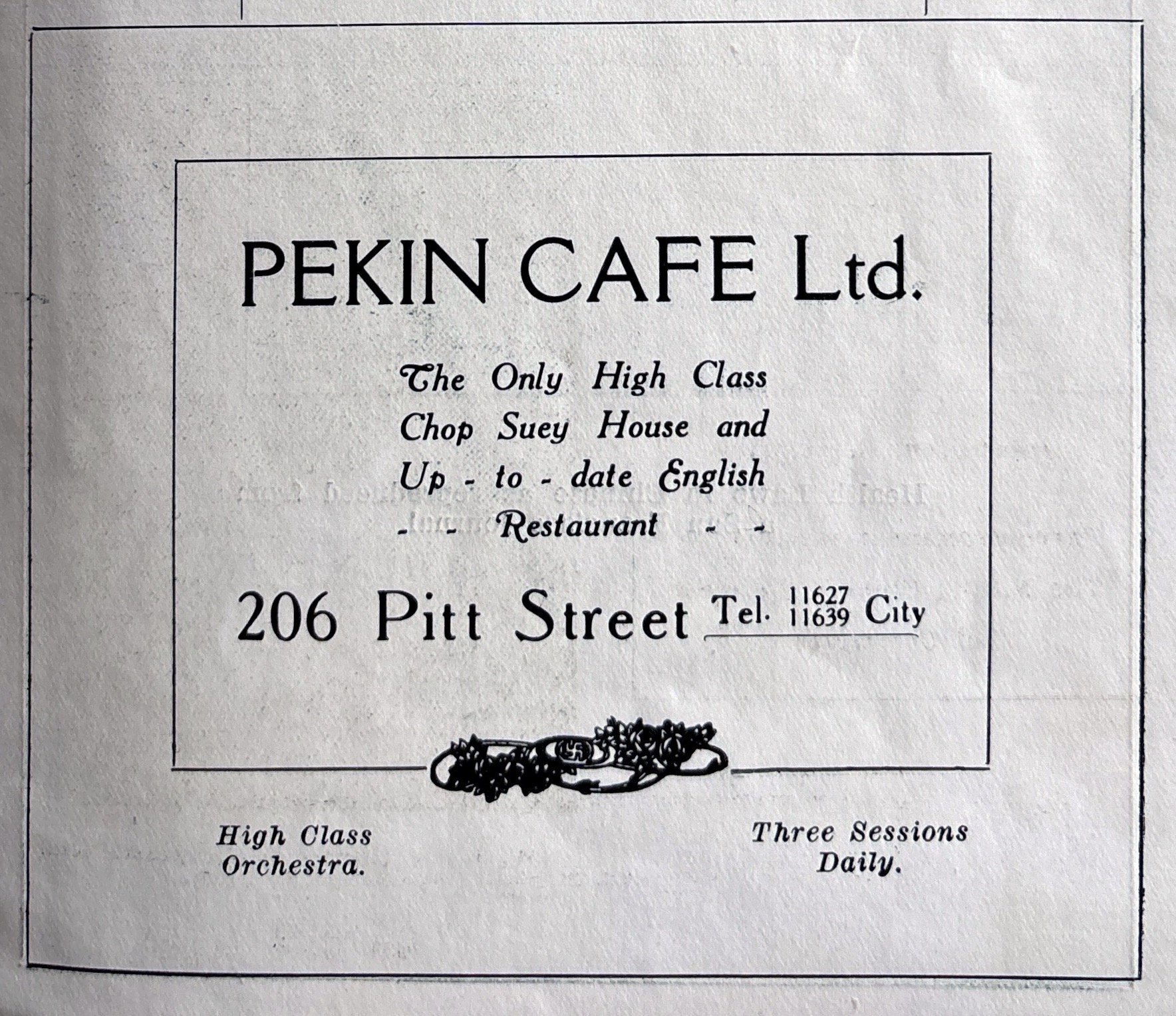
Peking Cafe
Chinese cafés and cookery have played a role in Australian history since the Gold Rush era. While John Ahloo's establishment on the Ballarat goldfield is most well known thanks to a famous illustration it was in urban areas that the first Chinese "cook shops" became established. At first intended for the local Chinese community, others in the local community soon frequented these places. By the end of the 19th century Sydney and Melbourne had Chinese cafes that served both Chinese and "western" meals. By the early 20th century these establishments began to go up market and Chinese restaurants such as the Pekin Cafe in both Sydney and Melbourne served "chop suey", a style of dish copied from the United States.
While Chinese restaurants were mainly established in urban centres during the late nineteenth and early twentieth centuries—serving both the Chinese community and a broad urban clientele—they later spread into rural. In the post–World War II years, Chinese cafés began appearing across country towns. Australia’s continued enforcement of the White Australia policy prevented refugees fleeing mainland China for Hong Kong from formally entering the country. However, many in Hong Kong maintained long standing family and business connections with Australia. Using these networks, they were able to migrate not as refugees but as workers in cafés and other “Chinese occupations,” exploiting one of the few loopholes that the policy permitted.
Even after the decline of the White Australia policy many migrants of Chinese heritage from Malaysia, Singapore and Hong Kong found that preparing and selling a variation on their family cuisine was a way to survive. In this they did not differ from many post-war migrant communities that also established cafes and restaurants. Though "Chinese Australian meals" continued to dominate in rural towns.