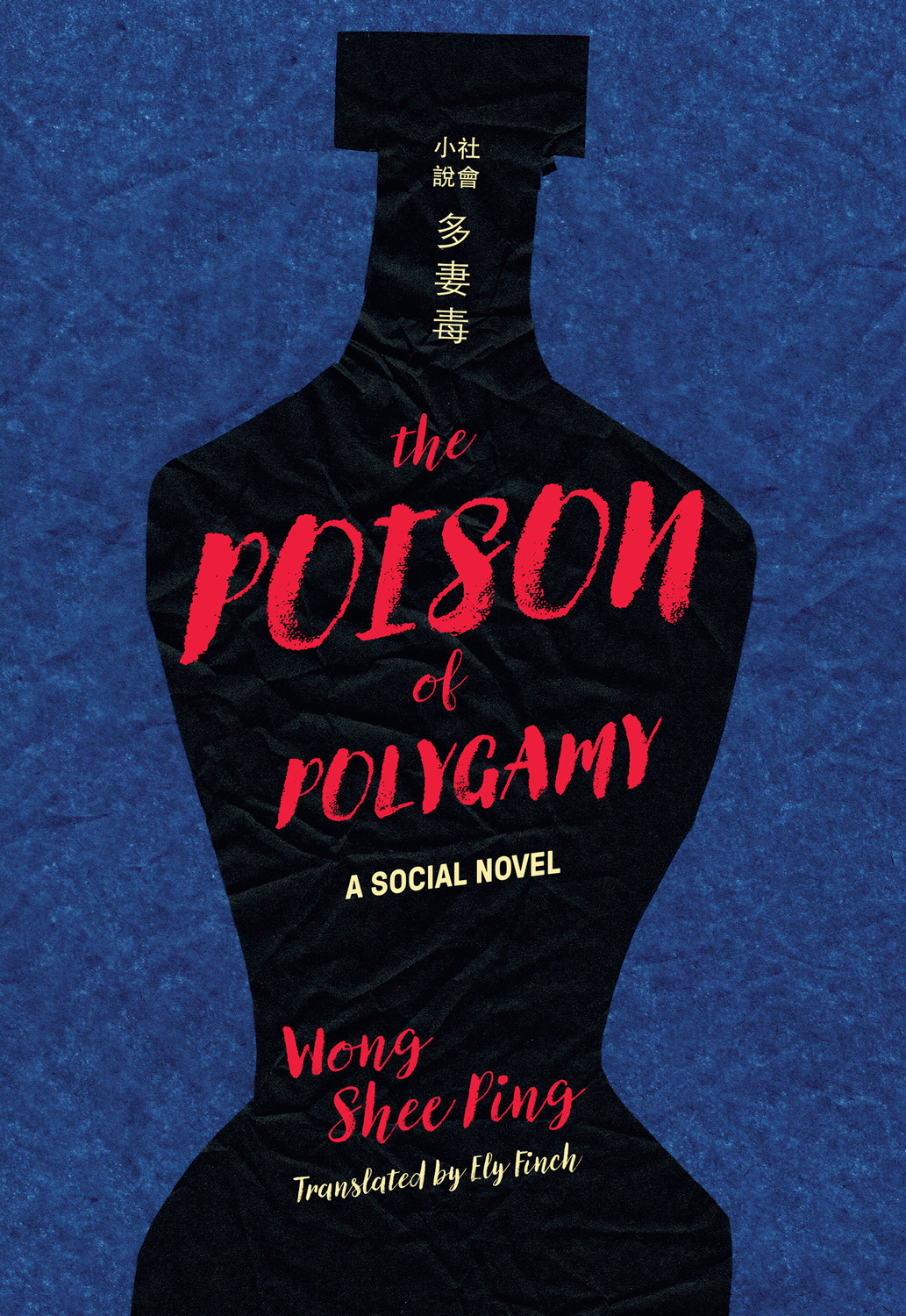
Poison of Polygamy / literature, Chinese Australian (First)
Date Published
: literature, politics, Chineseness
: Melbourne
: Melbourne
: 1910
The first Chinese Australian literature, written in Chinese.
The Poison of Polygamy
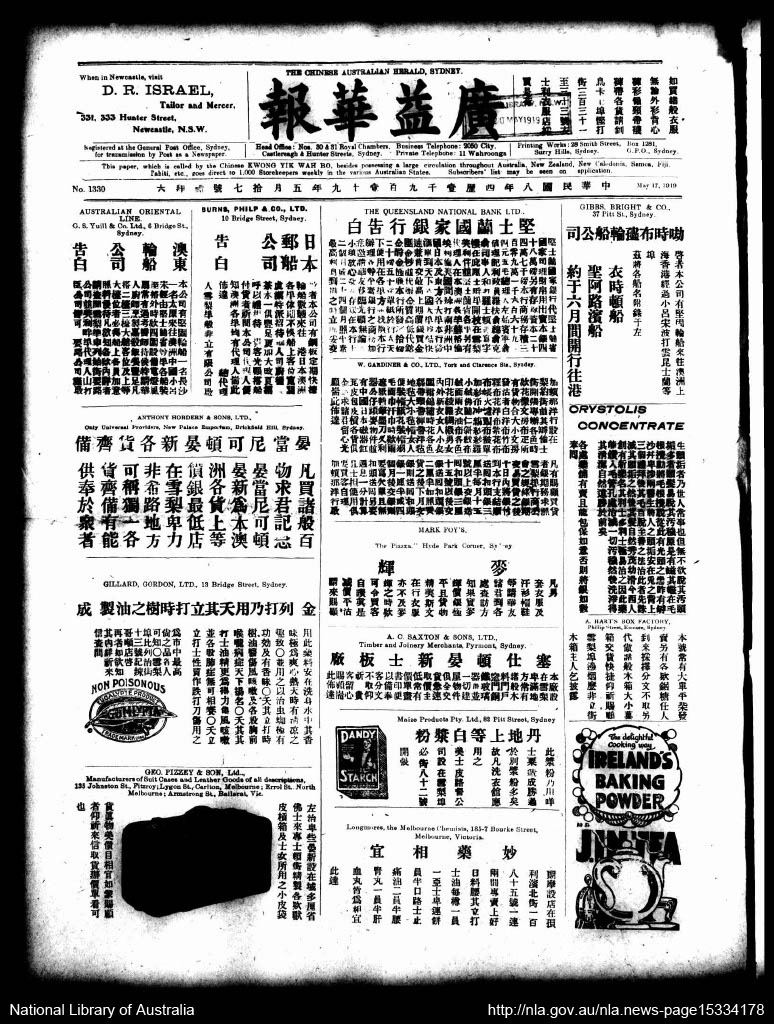
The first novel of the Chinese Australian experience was written before the fall of the Qing Empire, albeit by a die-hard republican. The rediscovery of this long-forgotten Chinese-language novel around a century after it first appeared in print, offers a rare window onto nineteenth century Australia from a local Chinese perspective, not to mention valuable insights into the emotional lives of the gold seekers and the wider social concerns of Chinese-Australians at the time of writing. It is also to be valued for offering a Chinese perspective on the experience of migration more broadly, and on the challenges of migration for families and communities. Wong Shee Ping, the author of this highly entertaining read, serialised The Poison of Polygamy in Melbourne’s Chinese Times newspaper, in roughly weekly instalments, from June 1909 to December 1910.[1]
The story is a morality tale that follows the highs and lows in the life of anti-hero Wong Sheung Hong, his virtuous wife, and the many characters he comes in contact with, during times spent in southern China, in south-eastern Australia and on route between the two. The novel offers a dramatic and detailed account of Wong’s humble beginnings, his not always moral efforts in life and his eventual rise in prosperity in Australia before returning to his long-suffering wife in his home village.
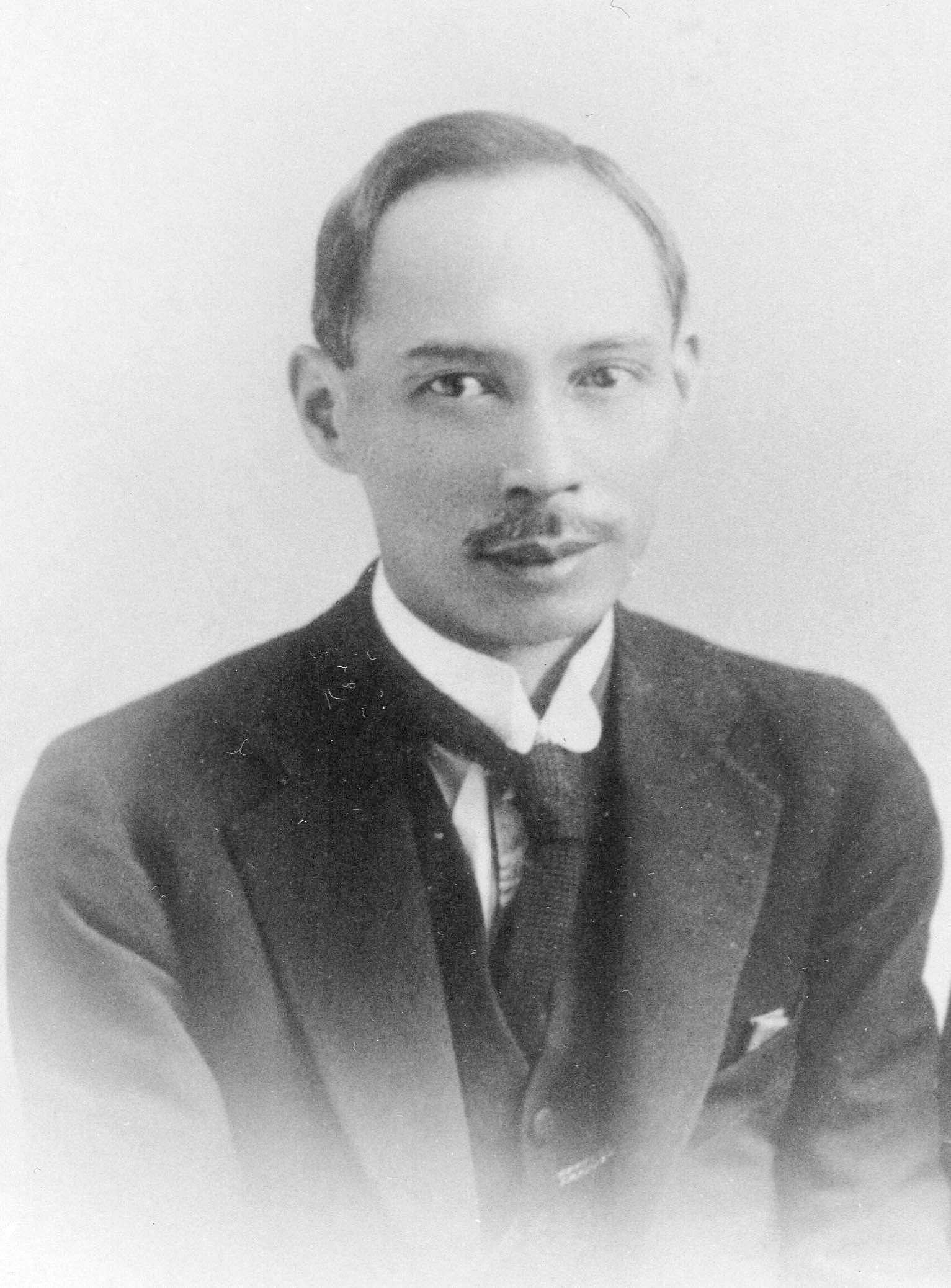
The author of The Poison of Polygamy was Wong Shee Ping, brother of the manager of the Pekin Cafe (see No.11) and son of a gold digger and Melbourne businessman from the See Yap region of southern China. Written therefore by a direct descendent of a gold digger, The Poison of Polygamy provides a fictional view of Victoria’s goldrush history, along with some historical inaccuracies and anachronisms, as in many works of fiction. Nevertheless, the work offers a rare insight into the Chinese experience and community memory of that history. The novel is a document of its times and was created with a distinct political and social agenda to mobilise and shape Chinese Australian communities in ways favouring the revolutionary nationalist cause.
The novel tells the story of a typical divided family of the mid-19th century. Histories of the males who moved often neglect the family’s members, and especially the wives, who did not. The Poison of Polygamy is rare therefore in its focus on both the challenges male immigrants experienced in the Australia of that time, and on the implications of their departure for the families they left behind. Although much of the story highlights the importance of fraternity and clan ties for successful settlement in Australia, the novel also portrays a wife left behind in China who suffers from loneliness and sacrifices her life for the sake of the patriarchal family into which she married.[2] The second half of the novel traces how arrivals from China transitioned from the tough life on the goldfields to becoming successful merchants, engaged in trade between Australia and China. Still, their lives were complicated by traditional demands that they produce heirs to carry on the patrilineal family name. This often served as justification for polygamy, or acquiring secondary wives, a troublesome practice that often led to disharmony in the family – and which lends the novel its title.
The author, the novel, the newspaper, and the many readers who enjoyed The Poison of Polygamy when it first appeared in print all merit a place in the social, political and literary history of contemporary Australia.[3] This is a place long denied not simply because the novel was written in Chinese but also because it was written in Literary Chinese, a form of writing that has now all but disappeared.[4] Even when such works have been translated, the translations often give the impression of a chunkiness or stiffness that the original does not deserve. The Poison of Polygamy and its new generation of English readers is extremely fortunate in being able to gain this glimpse into the world of pre-Republican China and of the Chinese diaspora in Australia not only as an historical and literary curiosity but in a rigorous but readable translation that allows the imagination and the drama of the story to be fully appreciated and enjoyed. This is an Australian story and one that all Australians can now enjoy and treasure, both those with and without Chinese ancestry.
Wong Shee Ping, The Poison of Polygamy – A Social Novel, translated by Ely Finch, and introduction by Mei-fen Kuo and Michael Williams (Sydney University Press, 2019).
[1] This article is a modified version of the historical introduction to The Poison of Polygamy, ‘Why is Polygamy Poisonous?’ by Mei-fen Kuo and Michael Williams, pp.11-35.
[2] For a discussion of the women left behind see Michael Williams, 2021. Holding Up Half the Family, Journal of Chinese Overseas 17.1, pp.179-195. https://doi.org/10.1163/17932548-12341438
[3] The many much shorter pieces of literature appearing in Australian’s Chinese language press since the 1890s are well documented in Haizhi Luo, Towards a Modern Diasporic Literary Tradition: The Evolution of Australian Chinese Language Fiction from 1894 to 1912 (Master diss., University of New South Wales, 2017).
[4] See Ely Finch’s Translators Introduction in The Poison of Polygamy for a detailed explanation, pp.37-78.
Adding to the context
"In this respect, too, it has peers. There were earlier long novels about diasporic Chinese life, for instance Java-born Thio Tjin Boen's Malay-language Tjerita Oei Se in 1903.55 Sinophone newspapers in Singapore likewise published a long novel at the same time as Poison,Footnote56 and British Columbian newspapers of this period feature poetry groups and literary pages in the newspaper.57 The most important category of Chinese-language literature abroad in the period of Poison, however, is a range of fictional works about life overseas featuring titles such as The Suffering Student or World of Gold.58 These were published under pseudonyms but drew on the experiences of returnees, several of them detailing hardship in support of explicit anti-American boycott agendas.59 The mistreatment of Chinese labour depicted in such novels fuelled an emotional response in China, and although Australia represented a smaller element of this narrative of global exploitation than the United States and Southeast Asia, it too was known to be a place of hardship and racism. It is therefore inexact to suggest that Poison might be “the earliest novel of the Chinese-diaspora experience, and the earliest Chinese-language novel to have been written anywhere in the West”, since there are demonstrable earlier examples of both.60 Placing Polygamy in this transnational context does not diminish the interest of the work; rather, it expands and contextualises how a new imaginary of the modern world overseas gradually entered Chinese literature through migration."
55 Leo Suryadinata, Chinese Adaptation and Diversity: Essays on Society and Literature in Indonesia, Malaysia & Singapore (Singapore: National University of Singapore Press, 1993), 103–4.
56 Kui Li and Qianqian Ren, “A Brief Statement on the Imitation of the Chapters Zhanghui Novels Published in the Singapore's Chinese Newspapers and Periodicals,” Journal of Chinese Literature and Culture 5, no. 2 (2017): 23–34.
57 Laifong Leung, “Literary Interactions between China and Canada: Literary Activities in the Chinese Community from the Late Qing Dynasty to the Present,” Journal of American-East Asian Relations 20, no. 2/3 (2013): 144–46.
58 Jing Tsu, “Extinction and Adventures on the Chinese Diasporic Frontier,” Journal of Chinese Overseas 2, no. 2 (2006): 247–68; Guanhua Wang, In Search of Justice: The 1905–1906 Chinese Anti-American Boycott(Cambridge: Harvard University Asia Center, 2001); Guanhua Wang, “Between Fact and Fiction: Literary Portraits of Chinese Americans in the 1905 Anti-American Boycott,” in Recollecting Early Asian America: Essays in Cultural History, ed. Josephine Lee, Imogene L. Lim, and Yuko Matsukawa (Philadelphia: Temple University Press, 2002), 143–56.
59 Wang, In Search of Justice, 135: Drawing on PRC scholarship from the 1960s, they list five pieces of boycott fiction, provoked by the US exclusion of Chinese migrants, published between 1905 and 1908. Like Poison, they are pseudonymous, but overseas Chinese contributed to them and they too reflect the overseas experience.
60 Ely Finch, “Translator's Introduction,” in Wong, The Poison of Polygamy, 37.
Source: Stenberg, J. (2023). Chinese-Australian Culture in a Sinophone History and Geography. Journal of Australian Studies, 47(3), 447–461. https://doi.org/10.1080/14443058.2023.2217822