Qing Commissioners
Date Published
: Qing Empire, discrimination / racism
: Australia
: Sydney
: 1886
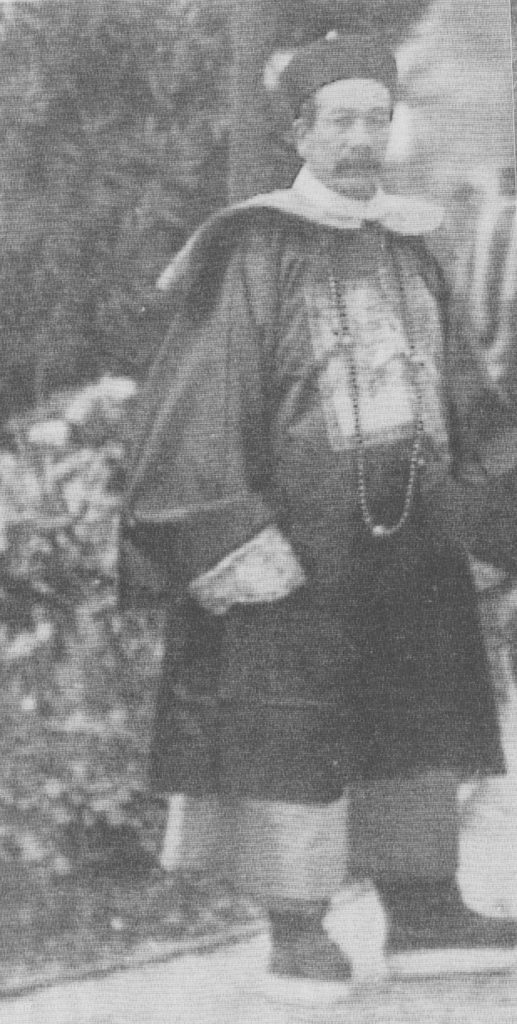
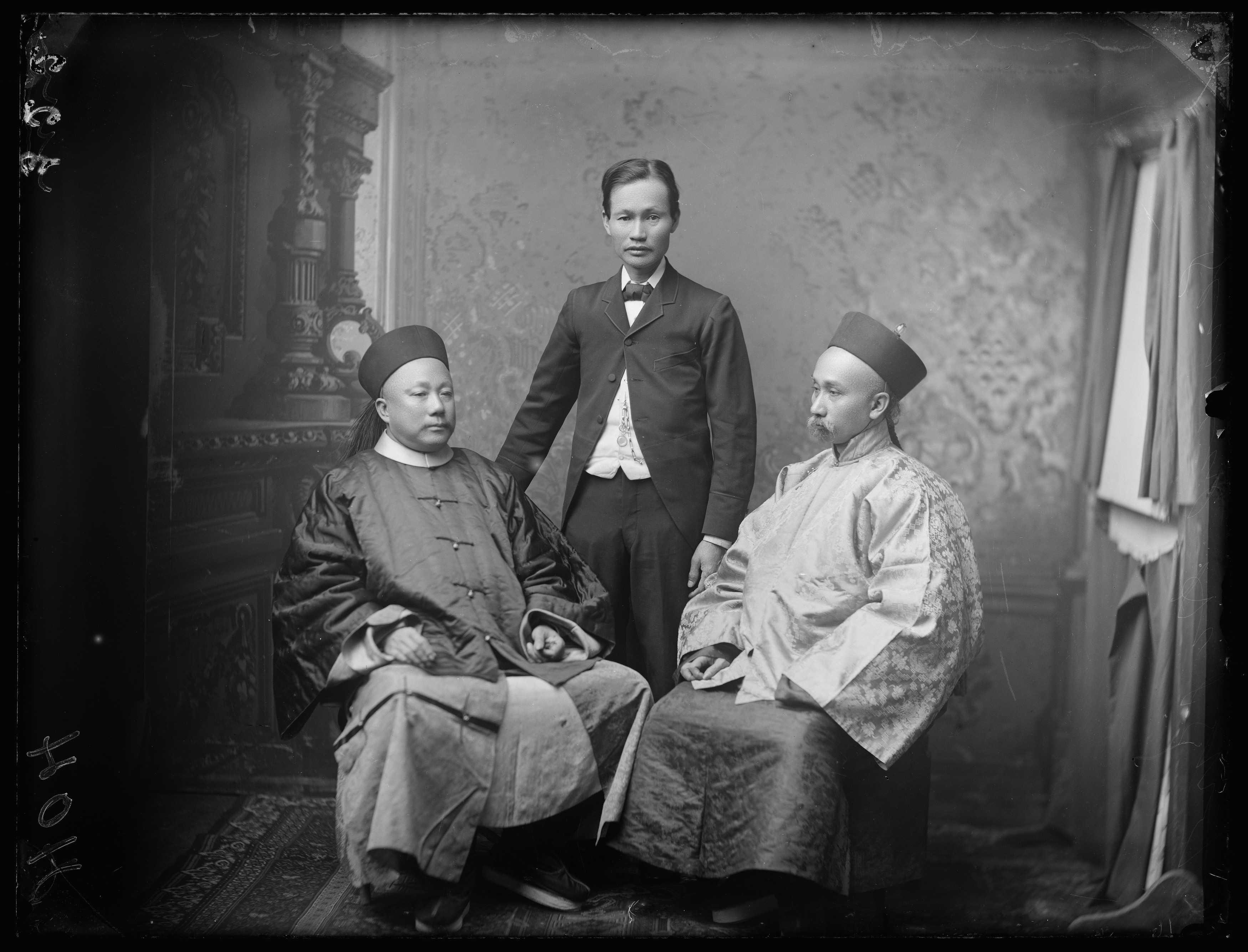
Qing Commissioners: Wong Yung Ho and U Tsing / Wang Ronghe (王榮和) and Yu Qiong (余瓗)
Wong Yung Ho and U Tsing / Wang Ronghe (王榮和) and Yu Qiong (余瓗) - Qing Commissioners in Australia
"Wang Ronghe was a general in the Qing military, with roots near Fujian’s migration hub of Xiamen. Wang himself, however, had been born in the British colony of Penang in the 1830s, where he mastered English at the Anglo-Chinese school. Wang joined the Qing army during the Taiping Rebellion around 1861, and his expertise in foreign languages and technologies seems to have made him an asset. Prior to the Commission he had been primarily deployed in the construction and operation of military telegraph lines.18 His colleague Yu Qiong was born in another locus of migration, Taishan, outside Guangzhou, in 1834. Yu passed the provincial exams to become an official (juren) in 1861 and held several domestic administrative positions before becoming the dynasty’s first consul at Nagasaki between 1878 and 1884. There, Yu had distinguished himself as an expert on foreign affairs.19"
18. Obituary memorialized by Li Hongzhang, GX16/10/29, can be found in First Historical Archives, Beijing, nos. 04-01-16-0231-035 and 03-5873-056, as well as Shen Bao, 15 Jan. 1891, no. 5374, 12. In Penang, Wang was a schoolmate of Lowe Kong Meng, who was born in 1831; see Argus (Melbourne), 27 May 1887, 3.
19. Gao Donghui, “Wan Qing wuyi ji zhu wai shiling guanyuan kaoshu,” Wuyi daxue xuebao 16, 4 (2016): 13.
Source: McGee N. Two Journeys into Diaspora: Qing and British Imperial Investigations in the Dutch East Indies and Australia. Comparative Studies in Society and History. 2026;68(4):874-899. doi:10.1017/S001041752610053X
Memorials of Zhang Zhidong
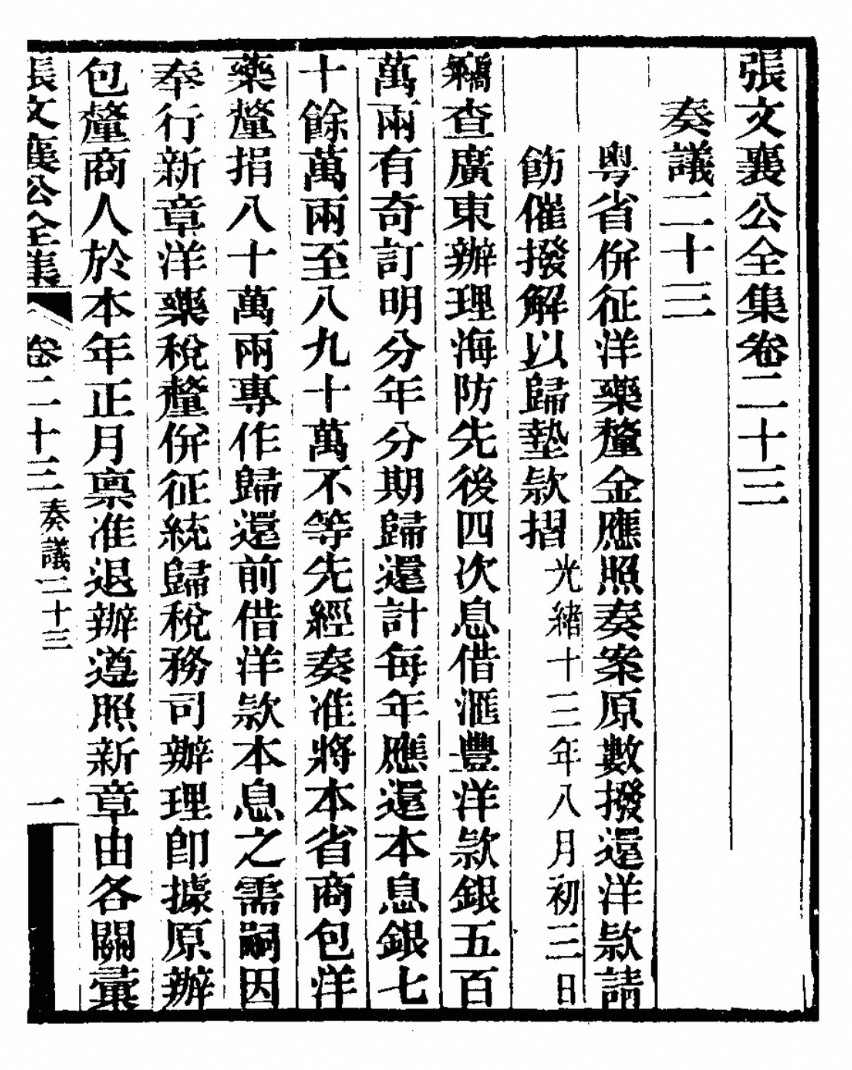
The findings of Wang and Yu were compiled and submitted by their sponsor, Viceroy of Liangguang Zhang Zhidong (張之洞). The report is found within Zhang’s collected memorials:《奏派員查明南洋商務並請設立領事疏》 (Memorial on Dispatching Commissioners to Investigate Nanyang Commerce and Requesting the Establishment of Consulates). These texts are archived in 《張文襄公奏議》 (Memorials of Zhang Zhidong)
A summary of the Commissioners report appears in Xue Fucheng’s account of his diplomatic mission to Britain, France, Italy and Belgium, Chushi Ying Fa Yi Bi Siguo Riji. Australia appears as an inserted report, not as an account of Xue’s own travels there. In Volume 3, Xue says he is excerpting information submitted by two commissioners, Wang Ronghe (王榮和) and Yu Qiong (余瓗). They had been sent to survey Chinese communities and commerce at ports around the South Seas. The Australian material appears in the entries for the 25th to 27th days.
Their report describes the Australian colonies, Chinese communities and businesses, immigration taxes, mining, trade and travel between settlements. It includes estimates of Chinese populations in places such as Sydney, Melbourne, Adelaide and Queensland. The mission was commissioned under Zhang Zhidong (張之洞), then Viceroy of Liangguang; he was the senior official who arranged the survey, while Wang and Yu were the commissioners who gathered and reported the information.
Citation
中文:
薛福成著,張玄浩、張英宇標點;鍾叔河主編。《出使英法義比四國日記》。長沙:岳麓書社,1985年8月。《走向世界叢書》。統一書號:11285-48。
English:
Xue Fucheng 薛福成. Chushi Ying Fa Yi Bi Siguo Riji 出使英法義比四國日記 [Diary of the Mission to Britain, France, Italy and Belgium]. Punctuated by Zhang Xuanhao 張玄浩 and Zhang Yingyu 張英宇; edited by Zhong Shuhe 鍾叔河. Changsha: Yuelu shushe, August 1985. Zouxiang Shijie congshu 走向世界叢書. Unified Book Number 11285-48.
Record of the 25th Day
Officials in Sydney, New Gold Mountain [Australia], are discussing a proposal to request that China quickly dispatch a Consul-General. The British Governor in Melbourne has advised China to participate in exhibitions and send naval vessels to patrol. The Chinese residents in Adelaide and Queensland were overjoyed to see the Chinese commissioners, as if witnessing the majestic dignity of Han dynasty officials.
British New Gold Mountain comprises five provinces, each equipped with a Governor, Governor-General, Treasurer, and Military Commander. The ports and islands already inspected include: Newcastle, Sydney, and New South Wales (all belonging to New South Wales province); Melbourne, Victoria, Ballarat, Bendigo (also known as the Big Gold Mountain), Beechworth, and Wangaratta (all belonging to Victoria province); Brisbane, Rockhampton, Bundaberg, Mackay, Cairns, Port Douglas, Townsville, and Cooktown (all belonging to Queensland province); Adelaide and Port Darwin (both belonging to South Australia province, which is also called the Adelaide province); as well as Western Australia province.
In Port Darwin, there are approximately one thousand Chinese merchants and laborers, and over a thousand more mining in the pits, making a total of just over three thousand people. The port has not been open for long, and commerce is not yet prosperous. The rice tax levied on the Chinese is very heavy: nine pounds sterling per ton, which is about three silver dollars and a fraction per *dan* (picul). The poll tax was ten pounds per person, but because it caused Chinese immigrants to shrink back and stop coming, it has since been abolished.
In New South Wales, tax revenue relies heavily on opium. Opium is taxed at forty-eight pounds sterling per chest, equivalent to over two hundred and eighty silver dollars; Manila cigars are taxed at six shillings per twelve taels, equivalent to one and a half silver dollars. The rice tax is three pounds sterling per ton. Newly arrived Chinese are required to pay a poll tax of ten pounds per person.
In Sydney, there are twenty-nine Cantonese merchant firms, and a total of four thousand Chinese merchants and laborers. Another six thousand or more are engaged in opening shops and farming in the interior. A particularly unreasonable and harsh policy is that Chinese merchants traveling from Sydney to Melbourne must pay an additional poll tax of ten pounds; traveling to Queensland incurs a heavy tax of thirty pounds.
The Governor of Victoria is stationed in Melbourne. Sydney is approximately twenty thousand *li* from China, a sea voyage of over twenty days by steamship. Being in the Antarctic region, the weather is unpredictable; cold winds arrive suddenly, giant waves slap the sky, and the ship tosses violently. Located forty-three degrees from the equator, the summer weather is like mid-winter in China; on the coldest days, heavy fur coats are required. The locals say that when June arrives, the cold is even more severe.
The sea voyage from Port Darwin to Sydney is 2,700 nautical miles. The railway from Sydney to Melbourne is 540 miles. The railway from Melbourne to Adelaide is 550 miles. The entire continent of Australia has five provinces, which is the "Australia" mentioned in *Yinghuan Zhilüe* (Records of the World); Westerners also call it New Gold Mountain. It is two thousand miles long and three thousand miles wide.
In Sydney and Melbourne, British merchants are the largest, followed by American merchants. In recent years, gold mines have gradually become depleted, but the cattle, horse, and sheep businesses are very prosperous. The main export is wool, with each port earning five hundred pounds sterling annually [Note: likely a transcription error in the original text for a much larger sum]. The main import is iron, and a considerable amount of timber is also shipped from New York.
There are over twenty thousand Cantonese people in these two ports. In Adelaide, Queensland, and nearby regions such as New Zealand and Fiji, there are another twenty thousand or more. There are few merchants and many laborers; imports are plentiful while exports are scarce. Chinese merchants in Sydney mostly transport and sell tea and soybean oil, and their scale is larger than in Melbourne. In recent years, Chinese growing tobacco in the port have seen slight improvements.
Furthermore, Ballarat, which is under the jurisdiction of the British Governor in Melbourne, has many gold mines, ranging from six hundred to a thousand feet deep. There are about seven hundred Chinese merchants and workers, and several hundred more scattered around digging and farming. There are only about two hundred Chinese in Adelaide, and new arrivals must each pay a poll tax of ten pounds. Bendigo (the Big Gold Mountain) also has many gold mines, with over ten Chinese firms and more than a thousand people digging and farming. Beechworth, belonging to Victoria, has only a few Chinese firms, with seven to eight hundred people digging and farming.
In the past, these three ports—Beechworth, Bendigo, and Ballarat—had the most flourishing gold mines, and the Chinese population exceeded thirty thousand. Now that the gold mines are depleted and poll taxes have been added, the Chinese are suffering greatly. However, if they commit crimes, British officials, knowing that they are unfamiliar with British law, often handle their cases leniently.
Historical Place Name Glossary (Cantonese Phonetics):
新金山 (San Gam San): New Gold Mountain (Australia)
雪梨 (Syut Lei): Sydney
美利濱 (Mei Lei Ban): Melbourne
亞都律 (Aa Dou Leot): Adelaide
袞司倫 (Gwan Si Leon): Queensland
紐所威路 (Nau So Wai Lou): New South Wales
仙大市 / 大金山 (Sin Daai Si / Daai Gam San): Bendigo (historically known as the "Big Gold Mountain")
咇治活 (Bat Zi Wut): Beechworth
旺加拉打 (Wong Ga Laa Daat): Wangaratta
庇厘市檳 (Bei Lei Si Ban): Brisbane
洛坑頓 (lok Hang Deon): Rockhampton
勃大啤 (But Daai Pe): Bundaberg
麥溪 (Mak Kai): Mackay
堅氏 (Gin Si): Cairns
波德{口忌}利市 (Bo Dak Gei Lei Si): Port Douglas
湯市喴路 (Tong Si Wai Lou): Townsville
谷當 (Guk Dong): Cooktown
砵打穩 (But Daat Wan): Port Darwin
紐詩倫 (Nau Si Leon): New Zealand
美市打聶 (Mei Si Daat Nip): Fiji